

Learn more about the Residential Heat Pump Water Heating Idea.
Market transformation (MT) works to accelerate the adoption of identified energy-efficient technologies or practices by removing structural barriers and enacting strategic interventions to create lasting change in a market. MT theory is the broad conceptualization of how best to address those barriers in order to accelerate adoption of a targeted technology or practice. The changes created by strategic interventions grow market share and pull adoption forward in time.
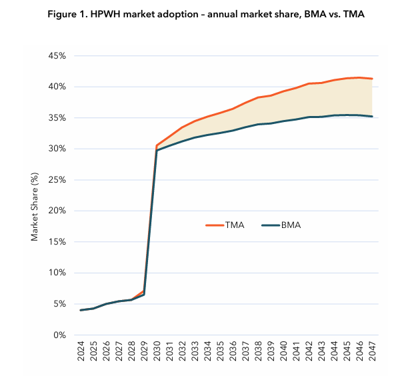
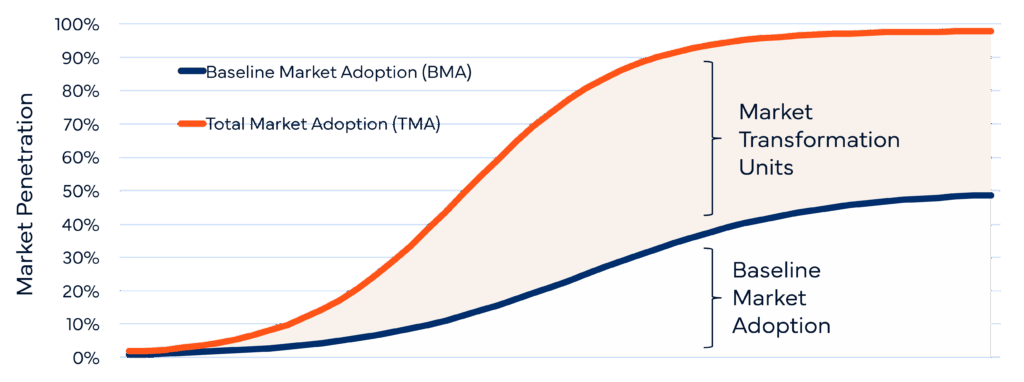
Figure 1 below shows the area between the Baseline Market Adoption and Total Market Adoption S-curves. The differential is the increase resulting from MT activities that deliver cost-effective energy efficiency, greenhouse gas (GHG) reductions, or other identified benefits.
MT theory works to establish clear, measurable inputs and outputs that can be assessed over time. Logic models provide a valuable roadmap to visualize the entire process of market transformation in a comprehensive chart. They depict barriers that make market adoption difficult, opportunities that can be leveraged for development, strategic interventions that will break down barriers, and the resulting outputs over time. In other words, logic models map out the MT theory. CalMTA uses logic models for its initiatives to ensure coherent program organization and clearly defined, measurable outcomes for evaluation. It’s important to know that while the logic model expresses the whole market, some of the interventions or leverage expressed is work that is already happening in a market, such as local efficiency program incentives, or that is anticipated to happen.
Market transformation works by removing barriers through a variety of interventions. The logic model expresses a variety of moving – and dependent – parts into a single model. A carefully conceived initiative logic model provides a tool for expressing and tracking program logic and is vital to successful market transformation.
We’ll use an example from the Residential Heat Pump Water Heating (HPWH) initiative. This initiative seeks to align with the various statewide efforts currently underway to help fill in the gaps and accelerate market adoption of HPWHs. CalMTA identified a number of barriers to market adoption including high upfront cost, low customer value proposition, access to incentives, and right-sized fit of products into existing homes.
A logic model not only identifies these barriers, but also the key strategic interventions required to remove barriers or to leverage opportunities. In the case of the HPWH market, research identified a lack of market signals to installers and manufacturers that consumers will accelerate purchases of HPWHs. To overcome this barrier, CalMTA is seeking a market intervention that will leverage the buying power of existing programs and catalyze a near-term increase in product sales in specific market segments. These segments will target “easier-to-install“ residences, such as electric-to-electric replacements, solar and potentially new construction. This intervention will also explore opportunities in ESJ communities with strong CBO support, installer coverage, and low-income programs.
This approach intends to build the business case, strengthen installer confidence, and accelerate adoption, helping manufacturers and supply-chain partners see a return on their investments and encourage their engagement in the Initiative.
Watch the November 13 MTAB meeting to learn more about the RHPWH Market Transformation Theory and Logic Model.
A Market Characterization study offers a detailed analysis of the structure, dynamics, and key players within a specific market. It helps identify opportunities and barriers for energy efficiency improvements and supports the design of effective programs and policies. After CalMTA develops an Advancement Plan for its market transformation initiatives (MTIs) in consultation with the Market Transformation Advisory Board (MTAB), we begin the process of studying the market for that product or practice through this research. In the case of Residential HPWH, we initiated the current market characterization study to understand the market landscape for HPWHs and the unique barriers and opportunities that exist in California.
CalMTA’s research found that the high up-front cost of HPWHs is a main reason why Californians who are aware of HPWHs choose other water heater options. Research and stakeholder interviews conducted to date have revealed that most water heater purchases occur during emergency failures, driving like-for-like gas replacements and heightened price sensitivity since customers have not budgeted for the expense and spend relatively little time thinking about water heating.
Additional barriers include lack of awareness of HPWHs and resistance to new technology adoption, bill savings concerns, household fit, complexity of installation and incentive access, and concerns about product performance and reliability.
HPWH unit purchase costs typically range from $1,800 to $3,000, putting costs nearly a thousand dollars higher, on average, than other, standard alternatives, such as natural gas storage water heaters. The total installed cost of a HPWH without electrical upgrades was estimated by interviewed California stakeholders as $6,000 to $7,000, and program data show total average installation costs for incentivized projects of approximately $8,000. This represents a total installed cost without incentives of at least $4,000 higher than alternatives.
Survey results revealed that residential customers were most influenced by long-term energy savings and lower operating costs when deciding whether to purchase a HPWH. Up-front cost, available incentives, and ease of installation were also important.
Residential survey results show that the primary barrier is lack of awareness about available incentives. Among those residents who were aware but still did not apply, the most common reasons include:
While survey results show that installers are highly aware of and familiar with HPWHs — every respondent had heard of them, and most expressed somewhat or very favorable impressions — the installation process still presents challenges. The top three issues reported by installers were: extensive documentation being required for incentive processing, long or unreasonable permit requirements, and customer concerns about demand response requirements.
Watch the November 13 MTAB meeting to learn more about the Residential HPWH Market Characterization Study.
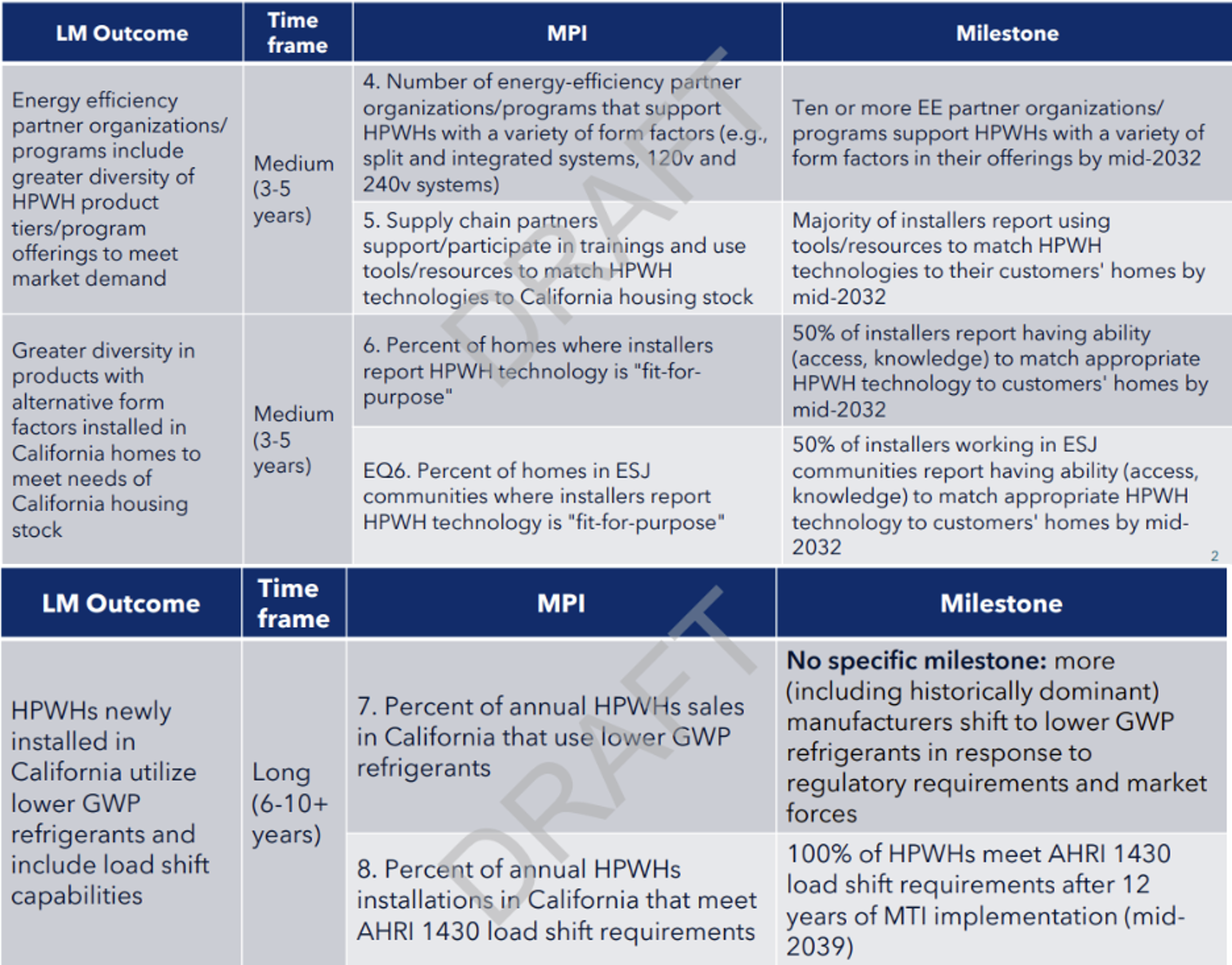
The Logic Model is a systematic and visual way of presenting CalMTA’s understanding of the interventions necessary to remove barriers, expected outcomes of those interventions, and a pathway to the desired end state.
This report will examine the California market for Residential Heat Pump Water Heating, characteristics of recent sales, supply chain dynamics, regulations and other factors influencing buying decisions, as well as the light commercial heating, ventilation, and air conditioning (HVAC) workforce.
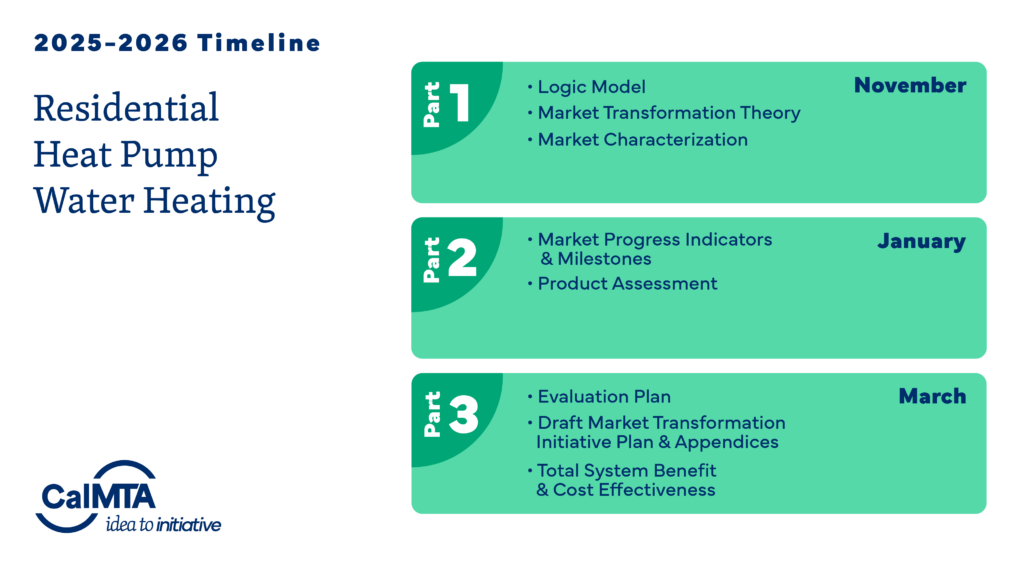
The Market Characterization Report will be posted following the Jan. 29 Market Transformation Advisory Board Meeting.
The California Market Transformation Administrator (CalMTA) develops and manages market transformation initiatives in the state to reduce energy use and reduce greenhouse gas (GHG) emissions.
CalMTA follows a rigorous process for reviewing, scoring, and then developing relevant, timely market transformation initiatives. The process supports market transformation initiative creation from concept to program development to market deployment, as well as the eventual exiting of the market.
Learn more about CalMTA’s planning and research on energy efficient technologies and our work to build California’s market transformation portfolio, and access quarterly and annual progress reports.
Want to learn more? Join our mailing list to stay informed about upcoming meetings and events, RFI and RFP announcements, and more.
We welcome your questions and suggestions.
Have questions or comments about CalMTA?
Use our contact form to connect with us, or reach out to:
CalMTA
Resource Innovations
719 Main Street, Suite A
Half Moon Bay, CA, 94019
(888) 217-0217
All Advisory Board meetings are open for public comment. If you’re unable to share your thoughts during an MTAB meeting, access our comment form to to provide your opinion.
Want to learn more? Sign up for our mailing list to receive twice-monthly updates about upcoming events, including Advisory Board meetings, informational webinars, important RFI deadlines, and more.